


- O investimento em chatbots para varejo deve crescer de $12 bilhões em 2023 para $72 bilhões até 2028 — impulsionado por retornos reais em redução de custos e conversão.
- Comece com um caso de uso: rastreamento de pedidos, recuperação de carrinho ou recomendações de produtos.
- Acompanhe a taxa de retenção, taxa de conversão e taxa de recuperação de carrinho — e continue aprimorando após o lançamento.
Isso já aconteceu com todos nós — parado em uma loja, precisando de uma informação rápida ou de outro tamanho de sapato, enquanto todos os vendedores estão ocupados. Então você espera.
Hoje, os chatbots para varejo estão resolvendo esse mesmo problema online — instantaneamente.
Um chatbot para varejo é um assistente com IA que ajuda os clientes a encontrar respostas, produtos e recomendações em tempo real, diretamente no site da loja ou nas redes sociais. E os números mostram que eles estão se tornando essenciais: os gastos do varejo com chatbots devem saltar de $12 bilhões em 2023 para $72 bilhões até 2028.
Os consumidores também estão aderindo: 69% já usaram IA para compras online, e o uso de IA para compras cresceu 35% entre fevereiro e novembro de 2025.
Neste guia, vamos explorar como os chatbots para varejo estão mudando as compras digitais — e por que cada vez mais marcas estão recorrendo a eles para recuperar vendas perdidas e melhorar a experiência do cliente.
O que são chatbots para varejo?
Um chatbot para varejo é um assistente com IA criado para compras online — usando processamento de linguagem natural (PLN) e IA conversacional para entender perguntas dos clientes e responder em tempo real, desde a descoberta de produtos até o suporte pós-compra.
Os chatbots para varejo de hoje vão muito além dos bots baseados em regras simples. Construídos sobre grandes modelos de linguagem (LLMs), eles lidam com perguntas complexas, personalizam recomendações e interagem com clientes em sites, redes sociais e aplicativos de mensagens.
Como funcionam os chatbots para varejo?
Os chatbots para varejo usam tecnologia de IA para automatizar partes essenciais da jornada de compra.
Ao integrar com sistemas de estoque e plataformas de pagamento, eles oferecem suporte em tempo real e assistência personalizada para melhorar a experiência do cliente e impulsionar as vendas.
Veja o passo a passo:
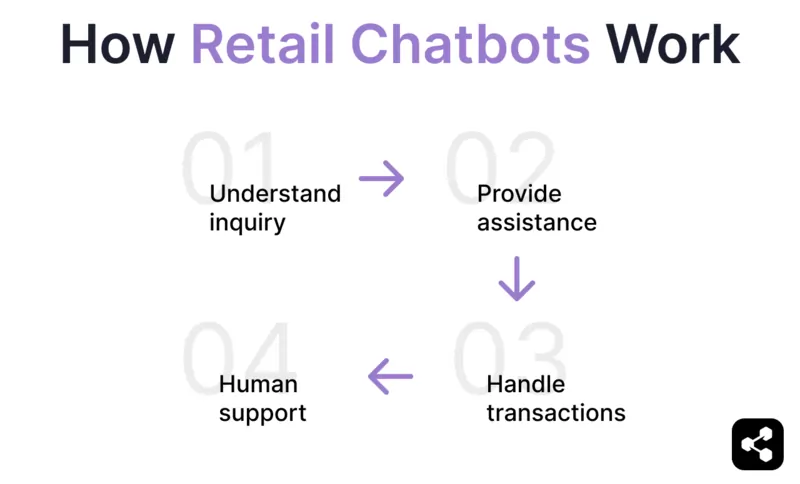
1. Entender as dúvidas dos clientes
Quando um cliente interage com um chatbot de varejo, ele não apenas reconhece as palavras. Utiliza PLN para identificar o que o cliente deseja (intenção) e detalhes relevantes (contexto).
Por exemplo, se um cliente pergunta: ‘Vocês têm esse tênis no tamanho 9?’. O chatbot identifica:
- Intenção: O cliente quer saber se o produto está disponível.
- Contexto: O produto específico (tênis) e o tamanho solicitado (9).
2. Oferecer assistência personalizada
Depois de identificar a intenção (buscar um produto específico) e analisar o contexto (tamanho e modelo), o chatbot verifica o estoque e responde com a disponibilidade em tempo real.
Se o tênis estiver disponível, pode dizer: ‘Sim! Temos disponível. Prefere na cor preta ou branca?’
Se o tamanho não estiver disponível, o chatbot pode:
- Sugerir modelos semelhantes
- Avisar quando o item estiver de volta ao estoque
- Oferecer a opção de entrar em uma lista de espera
3. Gerenciar transações e pedidos
Quando o cliente decide comprar, o chatbot conduz o processo de compra integrando-se aos sistemas principais do varejo:
- Sistema de gestão de pedidos (OMS): verifica o estoque e gera o pedido.
- Gateways de pagamento (Stripe, PayPal, etc.): processam as transações e aplicam descontos, se disponíveis.
- Sistemas de envio e logística: coletam dados de entrega e fornecem estimativas em tempo real.
O chatbot Rufus da Amazon permite que os clientes comprem produtos monitorando preços e estoques em tempo real pelo sistema da Amazon. Ele finaliza a compra usando os dados salvos do cliente, fornecendo confirmação e rastreamento imediatos.
4. Escalonamento para suporte humano
Quando um pedido é muito complexo para o chatbot de varejo resolver, ele aciona um processo de escalonamento com intervenção humana para garantir uma transição suave.
O chatbot detecta quando uma solicitação está fora de suas capacidades, como aprovar descontos especiais ou lidar com casos de fraude.
A escalada é acionada com base em níveis de confiança, regras de negócio pré-definidas ou solicitações explícitas do cliente.
Antes de transferir, o chatbot reúne informações importantes para o atendente, incluindo:
- Resumo do pedido do cliente e interações anteriores.
- Soluções já tentadas ou políticas relevantes.
O sistema então direciona a conversa para o agente mais qualificado e faz a transferência dentro da mesma interface de chat.
Após a resolução, o chatbot retorna à conversa para:
- Confirmar a solução e oferecer mais ajuda.
- Aprender com a interação para melhorar respostas futuras.
O que os chatbots para varejo podem fazer?
Os chatbots modernos para varejo fazem muito mais do que responder perguntas simples — eles se conectam aos seus sistemas, engajam clientes em todas as etapas da jornada de compra e automatizam fluxos de trabalho que antes exigiam intervenção humana.
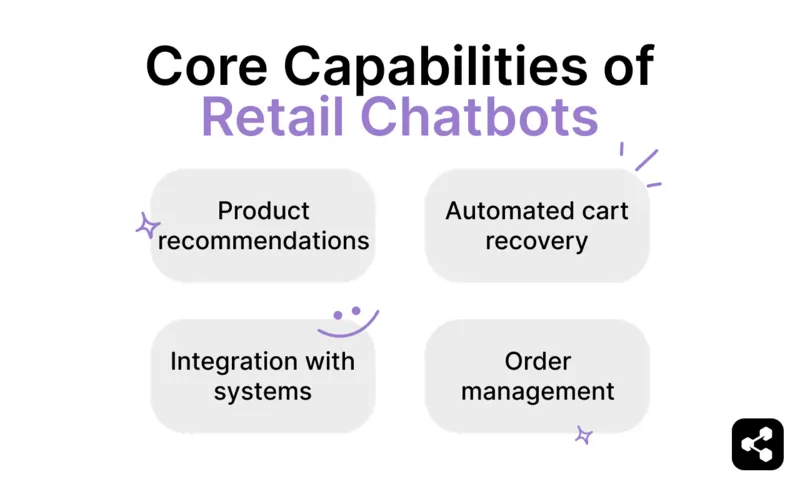
Recomendar produtos
Chatbots para varejo usam histórico de navegação, compras anteriores e comportamento em tempo real para oferecer sugestões personalizadas de produtos e oportunidades de upsell no momento certo — não só após a compra, mas também durante a descoberta.
A Forrester prevê que assistentes de IA se tornarão indispensáveis para pesquisa de produtos, comparação de preços e compras guiadas em plataformas de varejo.
Por exemplo, se o cliente está vendo tênis de corrida, o chatbot pode sugerir meias esportivas ou um combo promocional.
Automatize a recuperação de carrinho
70% dos carrinhos de compras online são abandonados no mundo todo — mas $260 bilhões dessas vendas perdidas podem ser recuperados apenas com uma experiência de checkout melhor.
Se um cliente adiciona itens ao carrinho mas não finaliza a compra, um chatbot para varejo pode enviar lembretes no momento certo, responder dúvidas de última hora e oferecer incentivos para estimular a finalização.
Integre com sistemas internos
Chatbots para varejo se conectam diretamente ao seu CRM, estoque e sistemas de preços para manter os dados dos clientes sincronizados e precisos.
Quando um cliente pergunta sobre disponibilidade de estoque ou uma promoção personalizada, o chatbot busca dados em tempo real para dar uma resposta confiável — sem consulta manual.
Gerenciar pedidos
Se um cliente pergunta "onde está meu pedido?", um chatbot para varejo pode buscar instantaneamente os detalhes de rastreamento e informar a data estimada de entrega. Se for necessário devolver, ele inicia o processo, gera etiquetas de envio e orienta o cliente em cada etapa — tudo sem intervenção humana.
Casos de Uso de Chatbot para Varejo
Chatbots para varejo estão sendo usados em todas as etapas da experiência de compra — desde a primeira busca por produtos até o suporte pós-compra. Aqui estão algumas das formas mais impactantes de como os varejistas estão colocando-os em prática.
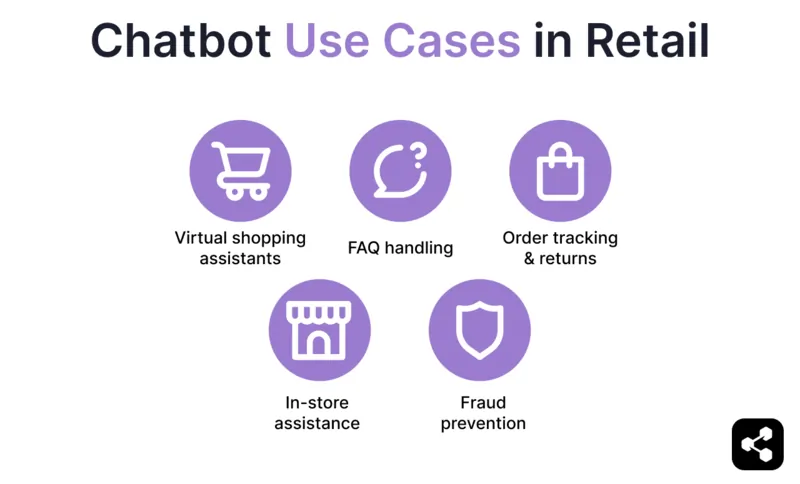
Assistentes virtuais de compras
Chatbots para varejo atuam como vendedores digitais, guiando clientes a produtos relevantes conforme suas preferências e histórico de compras.
Seja para dicas de estilo ou alertas de reposição, chatbots para varejo oferecem assistência personalizada e em tempo real, 24 horas por dia.
Exemplo: A Fromages d’ici usa a Froméo, uma assistente virtual com IA, para ajudar clientes a navegar por um catálogo de mais de 1.000 queijos com recomendações personalizadas e conversacionais.
Atendimento a perguntas frequentes
resolvem dúvidas comuns dos clientes, incluindo políticas da loja e processos de devolução, sem precisar de funcionários.
Chatbots para varejo atuam como chatbots de FAQ, respondendo automaticamente perguntas frequentes e repetitivas que sobrecarregariam o suporte — políticas da loja, dúvidas sobre tamanhos, processos de devolução e mais — instantaneamente e a qualquer hora.
Rastreamento de pedidos e devoluções
"Onde está meu pedido?" é uma das perguntas mais comuns no varejo. Chatbots se integram aos sistemas de pedidos para fornecer atualizações de rastreamento em tempo real, iniciar devoluções, gerar etiquetas de envio e orientar o cliente em cada etapa — sem precisar de um atendente.
Atendimento em loja
Algumas lojas vão além do site, usando totens ou aplicativos móveis na loja para ajudar clientes a consultar estoque, localizar produtos e comparar especificações — conectando o físico ao digital.
Prevenção de fraudes
Integrando com gateways de pagamento e ferramentas antifraude, chatbots para varejo verificam transações e orientam clientes em processos de pagamento seguros em tempo real — reduzindo o risco de compras não autorizadas sem complicar o checkout.
Vantagens dos Chatbots para o Varejo
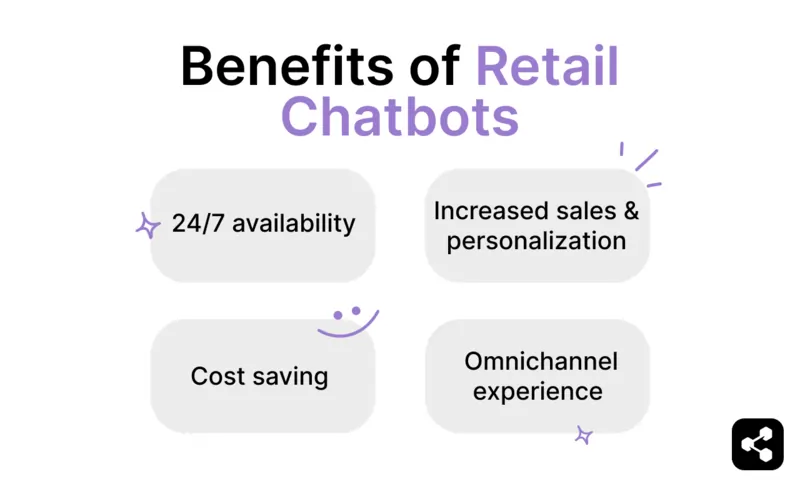
Ofereça suporte 24/7
Clientes não seguem horário comercial — e chatbots também não. Diferente de agentes humanos, chatbots para varejo oferecem assistência 24 horas, eliminando filas e garantindo respostas imediatas sempre que o cliente precisar.
Essa disponibilidade impacta diretamente os resultados. 72% dos clientes esperam atendimento imediato, e 64% gastam mais quando seus problemas são resolvidos no chat — tornando a resposta 24/7 um diferencial que gera receita.
Aumente vendas e personalização
Chatbots para varejo analisam preferências e compras anteriores para recomendar produtos relevantes no momento — transformando visitantes em compradores ativos.
A Fromages d’ici viu isso na prática: 20% dos usuários exploraram mais conteúdos do site após conversar com a Froméo, mostrando como o comércio conversacional impulsiona naturalmente a descoberta de produtos.
Reduza custos
Com margens cada vez menores, a redução de custos é um dos principais motivos para adotar IA no varejo.
Chatbots lidam com perguntas repetitivas e de alto volume — rastreamento de pedidos, disponibilidade de produtos, políticas de devolução — automatizando em escala sem perder qualidade nas respostas.
Segundo a Forrester, varejistas que entrarem em 2026 enfrentarão um cenário onde investir em automação para o cliente não será mais opcional.
Melhore a experiência omnichannel
Chatbots para varejo se integram a sites, aplicativos móveis e plataformas de mensagens como chatbots para WhatsApp e chatbots para Facebook Messenger — atendendo clientes onde eles já estão.
A sincronização de dados no backend garante que as informações acompanhem o cliente em todos os canais, sem perder contexto ao mudar de ponto de contato.
Como Criar um Chatbot para o Varejo
Criar um chatbot começa com um caso de uso claro, não com uma ferramenta. As melhores implementações focam em um resultado específico — responder dúvidas sobre produtos, recuperar carrinhos ou orientar compras — e expandem a partir daí.
Depois disso, é conectar os dados certos (como catálogo de produtos ou sistema de pedidos), desenhar como o chatbot vai interagir com os usuários e escolher uma plataforma que suporte tanto fluxos simples quanto automações avançadas conforme as necessidades crescem.
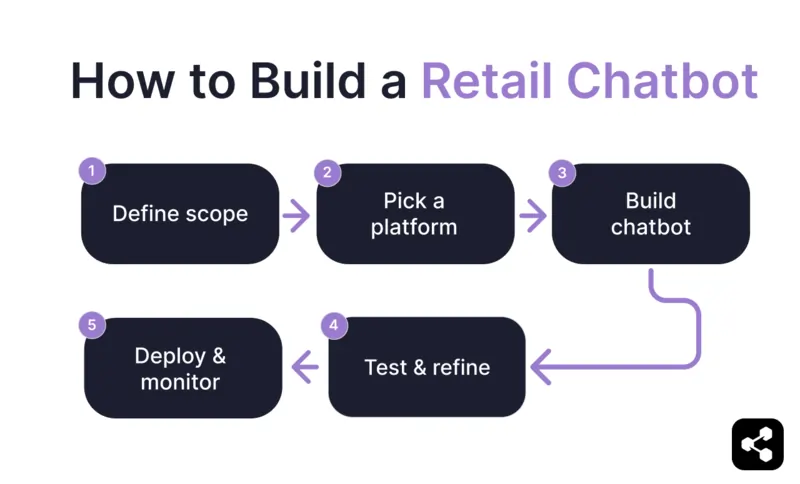
1. Defina o escopo
A maioria dos chatbots para varejo falha porque tenta fazer tudo ao mesmo tempo — descoberta de produtos, suporte a pedidos, retenção, upsell — antes de fazer bem qualquer uma dessas funções. Comece com um caso de uso de alto impacto.
Escolha algo concreto: rastreamento de pedidos, recomendações de produtos ou redirecionamento de perguntas frequentes. Depois, defina três pontos antes de construir:
- A principal intenção do usuário que você vai atender
- A métrica que define o sucesso (taxa de conversão, volume de redirecionamento, CSAT)
- O que o bot ainda não vai atender
Esse último ponto é tão importante quanto os dois primeiros. Um escopo claro permite lançar, medir e melhorar — antes de expandir.
2. Escolha a plataforma certa
A escolha da plataforma define tudo depois, então avalie cedo. Procure PLN nativo, busca de dados em tempo real e integração com seu stack atual — não só uma demonstração bonita.
Se estiver comparando opções, nossa lista das melhores plataformas de IA é um bom ponto de partida.
Dica: Para varejo, flexibilidade é fundamental. Você vai querer uma plataforma que suporte tanto fluxos estruturados (busca guiada de produtos, suporte ao checkout) quanto conversas abertas, sem precisar refazer tudo quando o escopo crescer. Os Autonomous Nodes da Botpress, por exemplo, permitem alternar entre os dois — especialmente útil quando o bot amadurece além do caso de uso inicial.
3. Construa e integre
Conecte seu chatbot ao stack de varejo desde o início — plataforma de e-commerce (Shopify, Magento, WooCommerce, etc.), sistema de pedidos e CRM. Sem essas integrações, o bot não consegue fornecer preços corretos, estoque em tempo real ou rastreamento confiável de pedidos, que são o básico que o cliente espera.
No lado de design de conversas, treine com dados reais. Use tickets de suporte, históricos de chat e buscas anteriores, não suposições sobre como o cliente fala. Adapte para regionalismos e múltiplos idiomas se seu público exigir.
Inclua também ações proativas — lembretes de carrinho abandonado, alertas de reposição, recomendações baseadas na navegação. Isso gera receita sem depender da iniciativa do cliente.
4. Planeje a transferência para humanos
Nem toda conversa deve ser automatizada. Devoluções complexas, disputas de pagamento e clientes insatisfeitos se beneficiam de uma transferência suave para um atendente — com todo o contexto preservado para que o cliente não precise repetir informações.
Defina esses gatilhos de escalonamento desde o início; adaptar depois é complicado.
5. Lance, monitore e melhore
Depois de lançado, trate o chatbot como um produto, não um projeto. Acompanhe taxas de engajamento, resolução e impacto em conversão continuamente.
Interações reais vão revelar lacunas que os testes não mostram — os bots que mais performam são os que são aprimorados constantemente após o lançamento.
9 Métricas para Avaliar Chatbots de Varejo
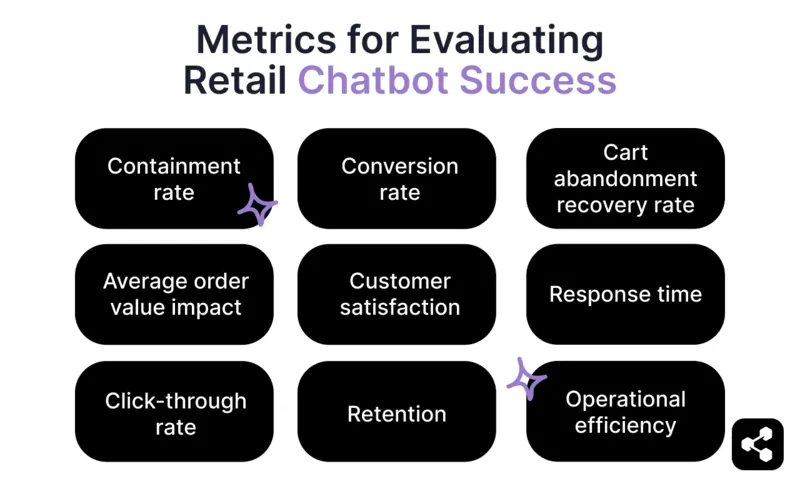
1. Taxa de contenção
Taxa de contenção é o percentual de conversas resolvidas totalmente pelo chatbot, sem transferência para um atendente humano.
Fórmula
Taxa de contenção = (Número de conversas resolvidas pelo chatbot ÷ Total de conversas) × 100
Exemplo
Se um chatbot atende 10.000 conversas no mês e 9.500 são resolvidas sem escalonamento, a taxa de contenção é: (9.500 ÷ 10.000) × 100 = 95%
2. Taxa de conversão
Taxa de conversão é o percentual de interações com o chatbot que resultam em uma ação desejada, como compra, cadastro ou adicionar produto ao carrinho.
Fórmula
Taxa de conversão = (Número de conversões ÷ Total de sessões do chatbot) × 100
Exemplo
Se um chatbot gera 2.000 sessões no mês e 300 resultam em compra ou cadastro, a taxa de conversão é: (300 ÷ 2.000) × 100 = 15%
3. Taxa de recuperação de carrinho abandonado
Taxa de recuperação de carrinho abandonado é o percentual de carrinhos abandonados que são recuperados com a ajuda do chatbot.
Fórmula
Taxa de recuperação de carrinho abandonado = (Carrinhos recuperados ÷ Total de carrinhos abandonados abordados pelo chatbot) × 100
Exemplo
Se 500 usuários abandonam o carrinho e o chatbot reengaja, e 125 finalizam a compra, a taxa de recuperação é: (125 ÷ 500) × 100 = 25%
4. Impacto no ticket médio (AOV)
O ticket médio (AOV) mede o valor médio gasto por pedido e pode ser usado para comparar compras influenciadas pelo chatbot com o total de compras.
Fórmula
AOV = Receita total ÷ Número total de pedidos
Exemplo
Se usuários do chatbot geram $50.000 em 1.000 pedidos, o AOV é: $50.000 ÷ 1.000 = $50
5. Satisfação do cliente (CSAT)
A satisfação do cliente (CSAT) é a média das notas dadas pelos clientes à experiência com o chatbot, geralmente coletada em pesquisas após a interação.
Fórmula
CSAT = (Número de respostas positivas ÷ Total de respostas) × 100
Exemplo
Se 200 usuários respondem à pesquisa e 160 avaliam positivamente, o CSAT é: (160 ÷ 200) × 100 = 80%
6. Tempo de resposta
Tempo de resposta é o tempo médio que o chatbot leva para responder a uma mensagem do usuário.
Fórmula
Tempo médio de resposta = Tempo total de resposta ÷ Número de respostas
Exemplo
Se um chatbot leva 5.000 segundos para responder 1.000 mensagens, o tempo médio de resposta é: 5.000 ÷ 1.000 = 5 segundos
7. Retenção
A taxa de retenção é o percentual de usuários que voltam a interagir com o chatbot após a primeira sessão.
Fórmula
Taxa de retenção = (Usuários que retornam ÷ Total de usuários) × 100
Exemplo
Se 1.000 usuários interagem com o chatbot e 300 retornam para outra sessão, a taxa de retenção é: (300 ÷ 1.000) × 100 = 30%
8. Taxa de cliques (CTR)
A taxa de cliques (CTR) é a porcentagem de usuários que clicam em sugestões do chatbot, como links de produtos, ofertas ou recomendações.
Fórmula
CTR = (Número de cliques ÷ Número de impressões) × 100
Exemplo
Se um chatbot exibe 2.000 recomendações de produtos e os usuários clicam em 400 delas, a CTR é: (400 ÷ 2.000) × 100 = 20%
9. Eficiência operacional
A eficiência operacional mede quanto o chatbot reduz o volume de trabalho e o custo do suporte ao automatizar conversas.
Fórmula
Custo por conversa = Custo total de suporte ÷ Total de conversas
Exemplo
Se o suporte humano custa $10.000 para 5.000 conversas ($2 por conversa) e o chatbot atende 3.000 dessas a custo quase zero, o custo efetivo por conversa diminui significativamente conforme a automação aumenta.
Implemente um chatbot personalizado para varejo
A Botpress é uma plataforma de chatbot altamente flexível e de nível empresarial, desenvolvida para o varejo. Nossa tecnologia permite criar chatbots personalizados que melhoram a interação com o cliente e impulsionam as vendas.
Com integração fácil entre plataformas de e-commerce, CRMs e aplicativos de mensagens, seu chatbot pode engajar clientes onde quer que estejam comprando.
Nossa suíte de segurança avançada garante que os dados dos clientes estejam sempre protegidos e sob total controle da sua equipe.
Perguntas frequentes
Como chatbots para varejo ajudam a reduzir o abandono de carrinho?
Chatbots para varejo recuperam carrinhos abandonados enviando lembretes no momento certo, respondendo dúvidas dos clientes e oferecendo incentivos para finalizar a compra, ajudando lojistas a recuperar parte dos 70% dos carrinhos de compras online que normalmente são abandonados.
Chatbots para varejo funcionam 24/7?
Sim, chatbots para varejo oferecem atendimento 24 horas por dia, garantindo que os clientes recebam respostas instantâneas a qualquer momento, sem tempo de espera, o que aumenta a satisfação e potencializa a receita.
Quais tarefas um chatbot para varejo pode realizar?
Chatbots para varejo podem fazer recomendações de produtos, responder perguntas frequentes, rastrear pedidos, processar devoluções, recuperar carrinhos e até prevenir fraudes ao integrar com sistemas de estoque, gateways de pagamento e plataformas de gestão de pedidos.
Chatbots para varejo substituem equipes humanas de atendimento?
Não, chatbots para varejo são projetados para lidar com perguntas repetitivas e de alto volume, complementando as equipes humanas em vez de substituí-las. Eles encaminham questões complexas para agentes humanos, mantendo o contexto da conversa para uma transição fluida.
Quanto custa criar um chatbot para varejo?
Chatbots simples de FAQ ou rastreamento de pedidos podem ser criados gratuitamente ou por algumas centenas de dólares usando plataformas low-code, enquanto chatbots avançados com integrações extensas podem exigir custos maiores conforme o escopo e a personalização.
Posso criar um chatbot para varejo sem conhecimentos técnicos?
Sim, você pode criar um chatbot para varejo sem ser desenvolvedor ou ter experiência técnica usando plataformas no-code ou low-code como a Botpress, que oferecem interfaces intuitivas, modelos prontos e ferramentas de arrastar e soltar para criar fluxos conversacionais.
Como medir se meu chatbot para varejo é bem-sucedido?
Métricas importantes incluem taxa de contenção (percentual de dúvidas resolvidas sem ajuda humana), taxa de conversão, taxa de recuperação de carrinho abandonado, índice de satisfação do cliente, tempo de resposta e eficiência operacional na redução de custos de suporte.