


- Inaasahang lalago ang paggastos sa retail chatbot mula $12 bilyon noong 2023 hanggang $72 bilyon pagsapit ng 2028 — dulot ng tunay na benepisyo sa pagbawas ng gastos at pagtaas ng conversion.
- Magsimula sa isang gamit: pagsubaybay ng order, pagbawi ng cart, o rekomendasyon ng produkto.
- Subaybayan ang containment rate, conversion rate, at cart recovery rate — at patuloy na pagbutihin matapos ilunsad.
Naranasan na nating lahat ito — nakatayo sa tindahan, kailangan ng mabilis na impormasyon o ibang sukat ng sapatos, habang abala ang lahat ng sales associate. Kaya maghihintay ka.
Ngayon, nilulutas ng mga retail chatbot ang parehong problema online — agad-agad.
Ang retail chatbot ay isang AI na katulong na tumutulong sa mga mamimili na makahanap ng sagot, produkto, at rekomendasyon nang real time, direkta sa website ng tindahan o sa social media. At ipinapakita ng mga numero na nagiging mahalaga na sila: inaasahang tataas ang paggastos sa retail chatbot mula $12 bilyon noong 2023 hanggang $72 bilyon pagsapit ng 2028.
Sumasabay din ang mga mamimili: 69% ng mga konsumer ay gumamit na ng AI para sa online shopping, at ang paggamit ng AI sa pamimili tumaas ng 35% mula Pebrero hanggang Nobyembre 2025.
Sa gabay na ito, tatalakayin natin kung paano binabago ng retail chatbots ang digital na pamimili — at bakit mas maraming brand ang gumagamit nito para mabawi ang nawalang benta at mapabuti ang karanasan ng customer.
Ano ang retail chatbots?
Ang retail chatbot ay isang AI na katulong na ginawa para sa online shopping — gamit ang natural language processing (NLP) at conversational AI para maintindihan ang tanong ng customer at makasagot agad, mula paghahanap ng produkto hanggang suporta pagkatapos ng pagbili.
Ang mga retail chatbot ngayon ay higit pa sa simpleng rule-based na bot. Gamit ang malalaking language model (LLM), kaya nilang sagutin ang komplikadong tanong, magbigay ng personalisadong rekomendasyon, at makipag-ugnayan sa mga mamimili sa website, social media, at messaging apps.
Paano gumagana ang retail chatbots?
Gumagamit ang mga retail chatbot ng AI upang i-automate ang mahahalagang bahagi ng karanasan sa pamimili.
Sa pamamagitan ng pagsasama sa mga sistema ng imbentaryo at mga plataporma ng bayad, nagbibigay sila ng suporta sa real-time at personalisadong tulong upang mapabuti ang karanasan ng customer at mapalago ang benta.
Narito ang hakbang-hakbang na proseso:
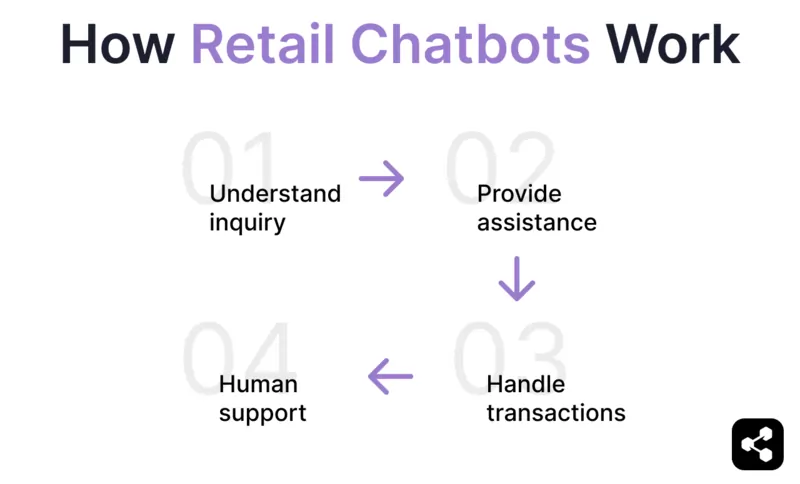
1. Unawain ang mga tanong ng customer
Kapag nakipag-ugnayan ang mamimili sa retail chatbot, hindi lang nito kinikilala ang mga salita. Sinusuri ito gamit ang NLP para matukoy ang layunin (intent) at mga detalye (konteksto) ng mamimili.
Halimbawa, kung magtanong ang customer, ‘May size 9 ba ng sapatos na ito?’ Natutukoy ng chatbot ang:
- Layunin: Naghahanap ang customer ng availability ng produkto.
- Konteksto: Ang partikular na produkto (sneakers) at ang hiniling na sukat (9).
2. Magbigay ng personalisadong tulong
Kapag natukoy na ng chatbot ang layunin ng mamimili (maghanap ng partikular na produkto) at nasuri ang konteksto (size at estilo), tinitingnan nito ang imbentaryo at sumasagot batay sa real-time na availability.
Kung may stock ang sapatos, maaaring sabihin nito, ‘Oo! Mayroon. Gusto mo ba ng itim o puti?’
Kung wala ang size, maaaring gawin ng chatbot ang mga sumusunod:
- Magrekomenda ng katulad na estilo
- Abisuhan ang customer kapag may restock na
- Mag-alok ng pagpipiliang sumali sa waitlist
3. Pangasiwaan ang mga transaksyon at order
Kapag nagpasya nang bumili ang mamimili, inaasikaso ng chatbot ang proseso ng pagbili sa pamamagitan ng pakikipag-ugnayan sa mga pangunahing retail system:
- Sistema ng pamamahala ng order (OMS): tinitiyak ang imbentaryo at bumubuo ng order.
- Mga payment gateway (Stripe, PayPal, atbp.): nagpoproseso ng mga transaksyon at naglalapat ng mga diskwento kung mayroon.
- Mga sistema ng pagpapadala at katuparan: kumukuha ng mga detalye ng pagpapadala at nagbibigay ng real-time na pagtatantiya ng paghahatid.
Ang chatbot na Rufus ng Amazon ay nagbibigay-daan sa mga customer na bumili ng produkto sa pamamagitan ng pagmamanman ng live na presyo at imbentaryo gamit ang sistema ng Amazon. Kinukumpleto nito ang checkout gamit ang naka-save na detalye ng customer, at nagbibigay ng agarang kumpirmasyon at tracking.
4. Pag-eskalate sa human support
Kapag masyadong kumplikado ang isang kahilingan para sa retail chatbot, ito ay nagti-trigger ng proseso ng pag-akyat sa tao upang matiyak ang maayos na paglipat.
Una, natutukoy ng chatbot kung ang tanong ay lampas sa kakayahan nito, tulad ng pag-apruba ng espesyal na diskwento o paghawak ng reklamo sa panlilinlang.
Ang pag-eskalate ay na-trigger batay sa confidence score, itinakdang business rules, o tahasang hiling ng customer.
Bago ilipat, kinokolekta ng chatbot ang mahahalagang detalye para sa ahente, gaya ng:
- Buod ng request ng customer at mga nakaraang pakikipag-ugnayan.
- Anumang sinubukang solusyon o kaugnay na polisiya.
Pagkatapos, itinuturo ng sistema ang usapan sa pinaka-angkop na ahente at inihahabilin ito sa parehong chat interface.
Kapag naresolba na ng ahente ang isyu, muling sasali ang chatbot sa usapan para:
- Kumpirmahin ang solusyon at mag-alok ng karagdagang tulong.
- Matuto mula sa interaksyon para mapabuti ang mga susunod na sagot.
Ano ang kayang gawin ng mga retail chatbot?
Kayang gawin ng mga modernong retail chatbot ang higit pa sa simpleng mga tanong ng customer — nakakabit sila sa iyong mga sistema, tumutulong sa bawat yugto ng pamimili, at nag-a-automate ng mga gawain na dati ay tao ang gumagawa.
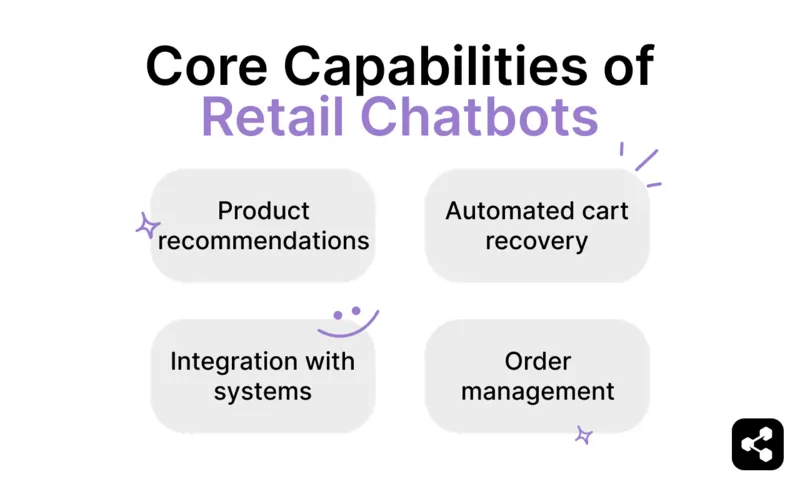
Magrekomenda ng mga produkto
Gamit ang browsing history, nakaraang binili, at kasalukuyang kilos, nagbibigay ang retail chatbots ng personalisadong suhestiyon ng produkto at upsell sa tamang oras — hindi lang pagkatapos ng pagbili, kundi pati sa yugto ng paghahanap.
Hinulaan ng Forrester na magiging mahalaga ang AI assistant sa pananaliksik ng produkto, paghahambing ng presyo, at gabay na pagbili sa mga retail platform.
Halimbawa, kung tumitingin ang mamimili ng running shoes, maaaring magrekomenda ang chatbot ng katugmang medyas na pang-atletiko o bundle deal na may limitadong oras.
I-automate ang pagbawi ng cart
70% ng online shopping carts ay iniiwan sa buong mundo — ngunit $260 bilyon ng mga nawalang order na iyon ay maaaring mabawi sa pamamagitan lang ng mas maayos na checkout experience.
Kung may customer na naglagay ng item sa cart pero hindi natuloy ang pagbili, maaaring magpadala ang retail chatbot ng paalala, sagutin ang huling tanong, at mag-alok ng insentibo para mahikayat silang mag-checkout.
Isama sa internal na sistema
Direktang nakakabit ang mga retail chatbot sa iyong CRM, imbentaryo, at sistema ng presyo para mapanatiling tama at updated ang datos ng customer.
Kapag may nagtanong tungkol sa availability ng stock o personal na promo, kinukuha ng chatbot ang live na datos para makapagbigay ng tamang sagot — hindi na kailangang mano-manong hanapin.
Pamahalaan ang mga order
Kung magtanong ang mamimili ng "nasaan na ang order ko?", agad na makukuha ng retail chatbot ang tracking details at magbibigay ng inaasahang petsa ng delivery. Kung kailangan ng return, maaari nitong simulan ang proseso, gumawa ng shipping label, at gabayan ang customer sa bawat hakbang — lahat ito nang walang tulong ng tao.
Mga Gamit ng Retail Chatbot
Ginagamit ang retail chatbots sa bawat bahagi ng pamimili — mula unang paghahanap ng produkto hanggang suporta pagkatapos ng pagbili. Narito ang ilan sa pinakamalaking epekto ng paggamit nito ng mga retailer.
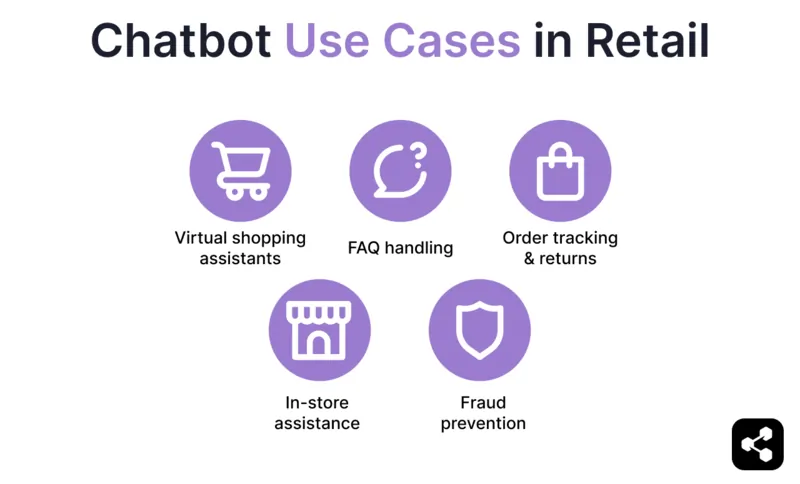
Virtual na shopping assistant
Gumaganap ang retail chatbots bilang digital na sales associate, ginagabayan ang customer sa mga angkop na produkto batay sa kanilang gusto at shopping history.
Kung kailangan ng mamimili ng payo sa estilo o abiso kapag may restock, nagbibigay ang retail chatbots ng real-time, personalisadong tulong anumang oras.
Halimbawa: Ginagamit ng Fromages d’ici ang Froméo, isang AI-powered na virtual shopping assistant, para tulungan ang mga customer na mag-navigate sa katalogo ng mahigit 1,000 keso gamit ang personalisadong, usapan-style na mga rekomendasyon.
Pagsagot sa FAQ
tugunan ang karaniwang tanong ng customer, kabilang ang mga patakaran ng tindahan at proseso ng pagbalik, nang hindi kailangan ng empleyado.
Gumaganap ang retail chatbots bilang FAQ chatbots, na sumasagot sa maraming paulit-ulit na tanong ng customer na dati ay sumasakop sa oras ng support staff — tulad ng patakaran ng tindahan, sukat, proseso ng return, at iba pa — agad at anumang oras.
Pagsubaybay ng order at pagbalik
"Nasaan na ang order ko?" ay isa sa pinakakaraniwang tanong sa retail. Nakakabit ang chatbots sa order management system para magbigay ng real-time tracking, simulan ang return, gumawa ng shipping label, at gabayan ang customer sa bawat hakbang — hindi na kailangan ng tao.
Tulong sa loob ng tindahan
May ilang retailer na pinalalawak ang chatbot lampas sa website, gamit ang kiosk o mobile app sa tindahan para tulungan ang customer na mag-check ng imbentaryo, hanapin ang produkto, at ikumpara ang specs — pinagdudugtong ang pisikal at digital na pamimili.
Pag-iwas sa panlilinlang
Sa pamamagitan ng pagsasama sa payment gateway at fraud detection tools, nabeberipika ng retail chatbots ang transaksyon at ginagabayan ang customer sa ligtas na pagbabayad nang real time — nababawasan ang panganib ng hindi awtorisadong pagbili nang hindi pinapahirapan ang checkout.
Mga Benepisyo ng Retail Chatbots
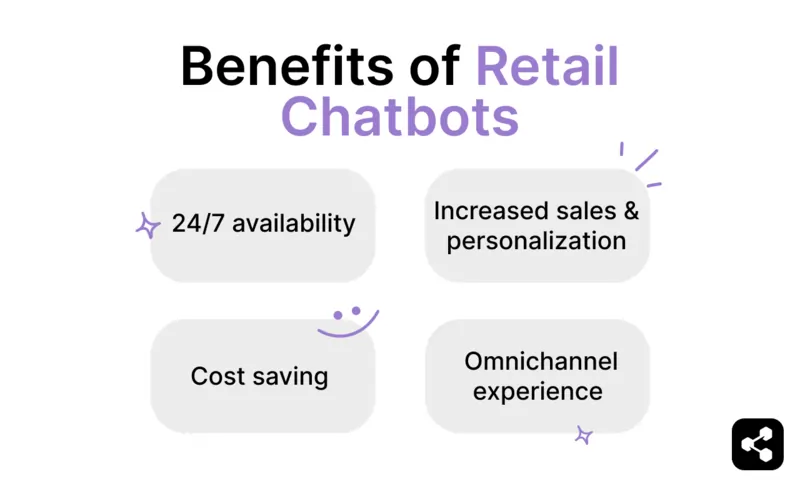
Magbigay ng 24/7 na suporta
Hindi sumusunod sa business hours ang mga mamimili — at ganoon din ang chatbots. Hindi tulad ng tao, nagbibigay ang retail chatbots ng tulong anumang oras, tinatanggal ang mahabang paghihintay at sinisigurong may sagot agad ang customer kapag kailangan nila.
Direktang naaapektuhan ng availability na ito ang kita. 72% ng customer ay umaasang agad na serbisyo, at 64% ay mas gumagastos kapag nasolusyunan agad ang problema nila sa chat — kaya ang 24/7 na tugon ay hindi na bonus kundi mahalaga sa kita.
Dagdagan ang benta at personalisasyon
Sinusuri ng retail chatbots ang hilig at nakaraang binili ng customer para magrekomenda ng tamang produkto sa tamang oras — ginagawang aktibong mamimili ang mga dating nagba-browse lang.
Naranasan ito ng Fromages d’ici: 20% ng user ay nag-explore pa ng mas maraming laman ng site matapos makipag-chat kay Froméo, na nagpapakita kung paano natural na nadadala ng conversational commerce ang mas malalim na pagtuklas ng produkto.
Bawasan ang gastos
Habang humihigpit ang kita, ang pagbawas ng gastos ay isa sa pinakamalakas na dahilan ng paggamit ng AI sa retail.
Sinasagot ng chatbots ang paulit-ulit at maraming tanong — pagsubaybay ng order, availability ng produkto, at patakaran sa pagbabalik — na kumakain ng oras ng ahente, at ina-automate ang mga ito nang hindi bumababa ang kalidad ng sagot.
Ayon sa Forrester, pagsapit ng 2026, ang mga retailer ay haharap sa panahon na ang pamumuhunan sa automation para sa customer ay hindi na opsyonal.
Pagbutihin ang omnichannel na karanasan
Nakakabit ang retail chatbots sa mga website, mobile app, at messaging platform tulad ng WhatsApp chatbots at Facebook Messenger chatbots — tinatagpuan ang mga customer saan man sila naroroon.
Dahil naka-synchronize ang backend, dala ng customer ang real-time na datos sa bawat channel, kaya hindi nawawala ang konteksto kapag lumipat sila ng paraan ng pakikipag-ugnayan.
Paano Gumawa ng Retail Chatbot
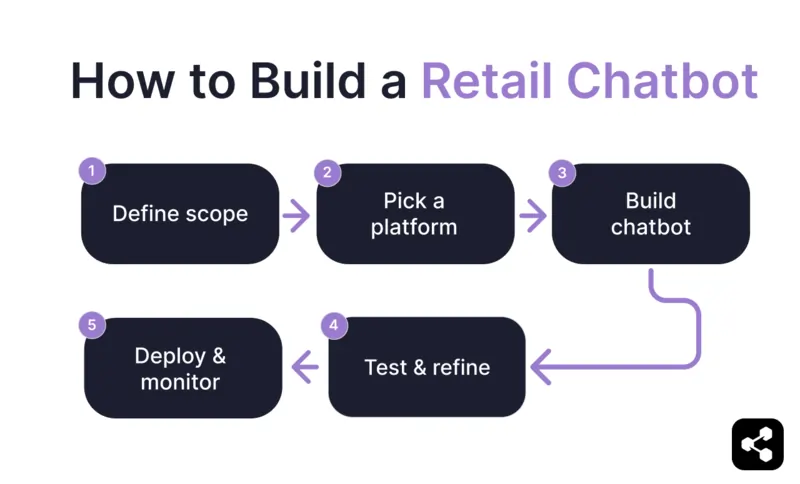
Nagsisimula ang paggawa ng chatbot sa malinaw na gamit, hindi sa tool. Pinakamabisa ang mga chatbot na nakatuon sa isang layunin — pagsagot sa tanong ng produkto, pagbawi ng cart, o paggabay sa pagbili — at pinalalawak mula roon.
Mula roon, mahalaga ang pagkonekta ng tamang datos (tulad ng katalogo ng produkto o sistema ng order), pagdisenyo kung paano makikipag-ugnayan ang chatbot sa user, at pagpili ng platform na kayang suportahan ang parehong simpleng flows at mas advanced na automation habang lumalaki ang pangangailangan.
1. Tukuyin ang saklaw
Kadalasang pumapalya ang retail chatbots dahil sinusubukan nilang gawin lahat agad — paghahanap ng produkto, suporta sa order, pagpapanatili ng customer, upselling — bago gumana nang maayos ang alinman. Magsimula sa isang gamit na may malaking epekto.
Pumili ng isang kongkretong bagay: pagsubaybay ng order, rekomendasyon ng produkto, o pag-iwas sa FAQ. Pagkatapos, tukuyin ang tatlong bagay bago magsimula:
- Ang pangunahing layunin ng user na iyong tinutugunan
- Ang sukatan na magpapakita ng tagumpay (conversion rate, dami ng na-deflect, CSAT)
- Ano ang hindi pa sasagutin o hahawakan ng bot
Kasinghalaga ng una at ikalawa ang huli. Ang malinaw na saklaw ay nagbibigay ng bagay na maaari mong ilunsad, sukatin, at pagbutihin — bago ito palawakin.
2. Piliin ang tamang platform
Ang pagpili ng platform ay nakakaapekto sa lahat ng susunod, kaya suriin agad. Hanapin ang may native na NLP, real-time na pagkuha ng datos, at suporta sa integration sa iyong kasalukuyang stack — hindi lang magandang demo.
Kung naghahambing ka ng mga opsyon, magandang panimula ang aming listahan ng top AI platforms.
Tip: Para sa retail, mahalaga ang kakayahang umangkop. Kailangan mo ng platform na kayang mag-handle ng parehong structured flows (guided product finder, checkout support) at mas bukas na usapan nang hindi kailangang buuin muli kapag lumawak ang saklaw. Halimbawa, pinapayagan ng Botpress's Autonomous Nodes ang mga ahente na magpalipat-lipat sa dalawa — mahalaga ito habang lumalago ang bot lampas sa unang gamit.
3. Bumuo at i-integrate
Ikonekta ang iyong chatbot sa retail stack mula umpisa — e-commerce platform (Shopify, Magento, WooCommerce, atbp.), order management system, at CRM. Kung walang mga integration, hindi makakapagbigay ang bot ng tamang presyo, real-time na imbentaryo, o maaasahang pagsubaybay ng order, na siyang inaasahan ng mga customer.
Sa conversation design na bahagi, sanayin gamit ang totoong datos. Gamitin ang mga nakaraang support ticket, chat log, at search query imbes na hula kung paano magsalita ang customer. Iakma sa rehiyonal na pananalita at maraming wika kung kinakailangan.
Isama rin ang mga maagap na aksyon — paalala sa naiwan na cart, abiso kapag may stock na ulit, rekomendasyon batay sa binrowse. Nagdadala ito ng kita kahit walang inisyatibo mula sa customer.
4. Magplano para sa human handoff
Hindi lahat ng usapan ay dapat i-automate. Ang komplikadong return, pagtatalo sa bayad, at galit na customer ay mas mainam na i-escalate sa tao — na may buong konteksto para hindi na ulitin ng customer ang kanilang kwento.
Tukuyin agad ang mga trigger ng escalation; mahirap itong idagdag kapag huli na.
5. Ilunsad, subaybayan, at pagbutihin
Kapag live na, ituring ang chatbot bilang produkto, hindi proyekto. Subaybayan ang engagement rate, resolution rate, at epekto sa conversion nang tuloy-tuloy.
Ipinapakita ng totoong interaksyon ang mga kakulangan na hindi lumalabas sa testing — ang mga bot na pinakamabisa ay yaong patuloy na pinapabuti matapos ilunsad.
9 na Sukatan para sa Pagsusuri ng Retail Chatbots
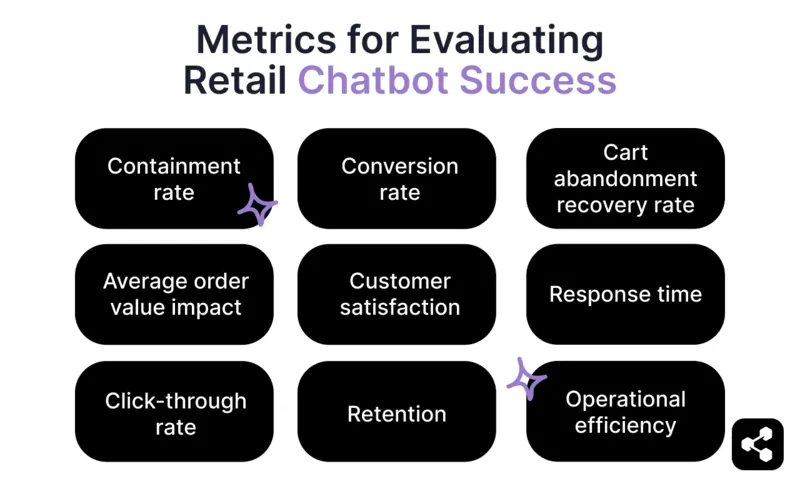
1. Containment rate
Ang containment rate ay porsyento ng mga usapan sa chatbot na ganap na nalutas nang hindi ipinapasa sa tao.
Pormula
Containment rate = (Bilang ng usapang nalutas ng chatbot ÷ Kabuuang usapan) × 100
Halimbawa
Kung ang chatbot ay humawak ng 10,000 usapan sa isang buwan at 9,500 dito ay nalutas nang hindi na-escalate, ang containment rate ay: (9,500 ÷ 10,000) × 100 = 95%
2. Conversion rate
Ang conversion rate ay porsyento ng interaksyon sa chatbot na nagreresulta sa nais na aksyon, tulad ng pagbili, pag-signup, o pagdagdag ng produkto sa cart.
Pormula
Conversion rate = (Bilang ng conversion ÷ Kabuuang chatbot session) × 100
Halimbawa
Kung ang chatbot ay may 2,000 session sa isang buwan at 300 dito ay nagresulta sa pagbili o signup, ang conversion rate ay: (300 ÷ 2,000) × 100 = 15%
3. Cart abandonment recovery rate
Ang cart abandonment recovery rate ay porsyento ng mga naiwan na cart na matagumpay na nabawi sa pamamagitan ng chatbot.
Pormula
Cart abandonment recovery rate = (Nabawi na cart ÷ Kabuuang naiwan na cart na naka-engage ng chatbot) × 100
Halimbawa
Kung 500 user ang nag-iwan ng cart at na-reengage ng chatbot, at 125 ang natuloy ang pagbili, ang recovery rate ay: (125 ÷ 500) × 100 = 25%
4. Epekto sa karaniwang halaga ng order (AOV)
Sinusukat ng average order value (AOV) ang karaniwang ginagastos kada order, at maaaring ikumpara ang mga biniling naimpluwensyahan ng chatbot laban sa kabuuang benta.
Pormula
AOV = Kabuuang kita ÷ Kabuuang bilang ng order
Halimbawa
Kung ang mga user ng chatbot ay nag-generate ng $50,000 na kita sa 1,000 order, ang AOV ay: $50,000 ÷ 1,000 = $50
5. Kasiyahan ng customer (CSAT)
Ang customer satisfaction (CSAT) ay ang karaniwang iskor na ibinibigay ng mga customer sa kanilang karanasan sa chatbot, na karaniwang kinokolekta sa pamamagitan ng post-interaction survey.
Pormula
CSAT = (Bilang ng positibong sagot ÷ Kabuuang sagot) × 100
Halimbawa
Kung 200 user ang sumagot sa survey at 160 dito ay positibo ang rating, ang CSAT score ay: (160 ÷ 200) × 100 = 80%
6. Response time
Ang response time ay ang karaniwang oras na kailangan ng chatbot para sumagot sa mensahe ng user.
Pormula
Karaniwang response time = Kabuuang response time ÷ Bilang ng sagot
Halimbawa
Kung ang chatbot ay gumugol ng 5,000 segundo sa pagsagot sa 1,000 mensahe, ang average response time ay: 5,000 ÷ 1,000 = 5 segundo
7. Retention
Ang retention rate ay porsyento ng mga user na bumalik para makipag-ugnayan muli sa chatbot matapos ang unang session.
Pormula
Antas ng pagpapanatili = (Bumabalik na mga gumagamit ÷ Kabuuang mga gumagamit) × 100
Halimbawa
Kung 1,000 ang gumamit ng chatbot at 300 ang bumalik para sa isa pang sesyon, ang antas ng pagpapanatili ay: (300 ÷ 1,000) × 100 = 30%
8. Click-through rate (CTR)
Ang click-through rate (CTR) ay porsyento ng mga gumagamit na nagki-click sa mga suhestiyon ng chatbot tulad ng mga link ng produkto, alok, o rekomendasyon.
Pormula
CTR = (Bilang ng mga pag-click ÷ Bilang ng mga pagpapakita) × 100
Halimbawa
Kung nagpakita ang chatbot ng 2,000 rekomendasyon ng produkto at 400 dito ang na-click ng mga gumagamit, ang CTR ay: (400 ÷ 2,000) × 100 = 20%
9. Operasyonal na kahusayan
Sinusukat ng operasyonal na kahusayan kung gaano nababawasan ng chatbot ang trabaho at gastos sa suporta sa pamamagitan ng pag-awtomatiko ng mga usapan.
Pormula
Gastos bawat usapan = Kabuuang gastos sa suporta ÷ Kabuuang bilang ng usapan
Halimbawa
Kung ang gastos ng human support ay $10,000 para sa 5,000 usapan ($2 bawat usapan), at ang chatbot ay humahawak ng 3,000 dito na halos walang gastos, ang aktuwal na gastos bawat usapan ay malaki ang ibinababa habang tumataas ang awtomasyon.
I-deploy ang Custom Retail Chatbot
Ang Botpress ay isang napakaliksi at enterprise-grade na plataporma ng chatbot na idinisenyo para sa retail. Binibigyang-daan ng aming teknolohiya ang mga negosyo na lumikha ng mga pasadyang chatbot na nagpapahusay ng ugnayan sa customer at nagpapalago ng benta.
Sa tuluy-tuloy na integrasyon sa mga e-commerce platform, CRM, at messaging app, maaaring makipag-ugnayan ang iyong chatbot sa mga customer saan man sila namimili.
Tinitiyak ng aming pinalakas na security suite na laging protektado ang datos ng customer at ganap na kontrolado ng iyong team.
FAQs
Paano nakakatulong ang retail chatbots na mabawasan ang pag-abandona ng cart?
Naibabalik ng retail chatbots ang mga naiwanang cart sa pamamagitan ng pagpapadala ng napapanahong paalala, pagsagot sa mga tanong ng customer, at pagbibigay ng insentibo para mahikayat ang pag-checkout, kaya natutulungan ang mga retailer na mabawi ang bahagi ng 70% ng mga online shopping cart na karaniwang iniiwan.
Maaaring gumana ang retail chatbots nang 24/7?
Oo, nagbibigay ang retail chatbots ng tuloy-tuloy na tulong, kaya nakakakuha ang mga mamimili ng agarang sagot anumang oras nang walang paghihintay, na nagpapabuti sa kasiyahan ng customer at nagpapalaki ng potensyal na kita.
Ano-anong gawain ang kayang gampanan ng retail chatbot?
Kaya ng retail chatbots ang rekomendasyon ng produkto, pagsagot sa mga madalas itanong, pagsubaybay ng order, pagproseso ng pagbalik, pagbawi ng cart, at kahit pag-iwas sa panloloko sa pamamagitan ng integrasyon sa mga sistema ng imbentaryo, payment gateway, at mga platform ng pamamahala ng order.
Pinalitan ba ng retail chatbots ang mga human customer support team?
Hindi, ang retail chatbots ay dinisenyo para hawakan ang paulit-ulit at maraming tanong at dagdagan ang kakayahan ng human teams, hindi para palitan sila. Inililipat nila ang mas komplikadong isyu sa mga human agent habang pinananatili ang konteksto ng usapan para sa maayos na paglipat.
Magkano ang gastos sa paggawa ng retail chatbot?
Ang simpleng FAQ o order-tracking chatbots ay maaaring gawin nang libre o sa ilang daang dolyar gamit ang low-code platforms, habang ang mas advanced na retail chatbots na may malawak na integrasyon ay maaaring mangailangan ng mas mataas na tuloy-tuloy na gastos depende sa lawak at pag-customize.
Maaari ba akong gumawa ng retail chatbot kahit walang teknikal na kasanayan?
Oo, maaari kang gumawa ng retail chatbot kahit walang developer o teknikal na background gamit ang no-code o low-code platforms tulad ng Botpress, na may madaling gamitin na interface, mga template, at drag-and-drop na mga tool para bumuo ng mga daloy ng usapan.
Paano ko malalaman kung matagumpay ang aking retail chatbot?
Ang mga pangunahing sukatan ay kinabibilangan ng containment rate (porsyento ng mga tanong na nalutas nang walang tulong ng tao), conversion rate, recovery rate ng cart abandonment, customer satisfaction scores, bilis ng pagtugon, at operasyonal na kahusayan sa pagbabawas ng gastos sa suporta.