


Here's a stat that might surprise you: AI chatbots are projected to power 95% of all customer service interactions by 2026. And companies that haven't adopted some form of AI-driven customer support are already playing catch-up.
The reason? AI chatbots are remarkably cost-effective. The average chatbot interaction costs about $0.50, compared to $6.00 for a human-handled one — a 12x difference. For growing businesses, that math speaks for itself.
So how do users choose the right platform to build their AI agents? This review takes a deep dive into Voiceflow and its alternatives, including Botpress, Chatbase, and Tidio.
Voiceflow Overview
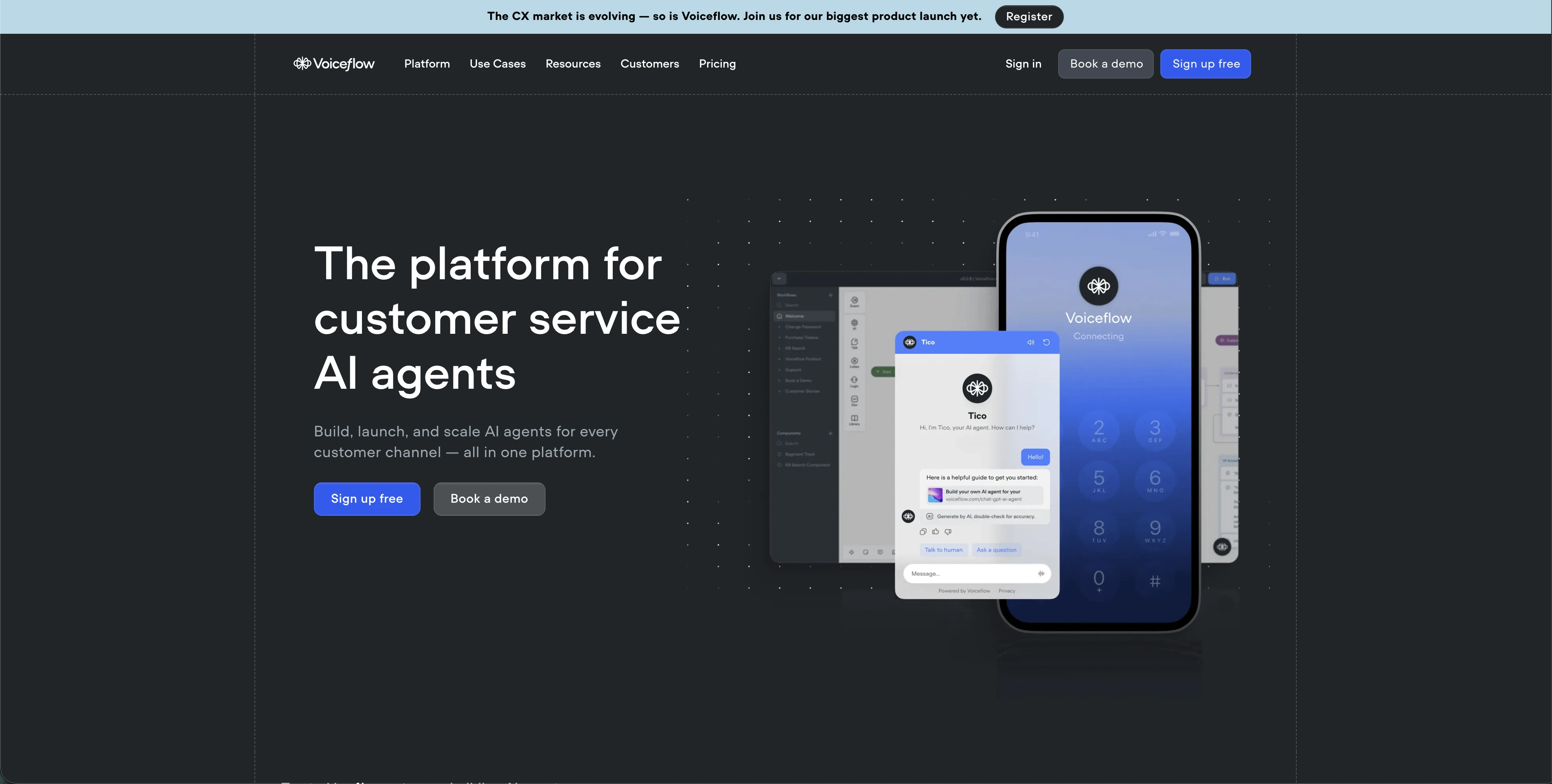
Voiceflow is a no-code conversational AI platform designed to help teams build, test, and deploy AI agents across chat and voice channels. Founded in 2019, it's grown to serve over 500,000 teams globally.
The platform's core strength is its visual drag-and-drop flow builder. Users design conversation logic by connecting blocks on a canvas — no coding required. It supports knowledge base integration, letting teams upload documents or websites so their agents can pull from real company data.
Voiceflow also offers API access and JavaScript/TypeScript code blocks for teams that need deeper customization. It supports LLMs from OpenAI and Anthropic on paid plans, with a built-in analytics dashboard and transcript review tools. The platform holds ISO/IEC 27001 and SOC-2 certifications for enterprise security.
Voiceflow Pros
Intuitive visual builder
Ease of use is the single most mentioned positive across Voiceflow's G2 reviews, with over 80 user mentions. Users consistently praise the drag-and-drop flow builder for making complex conversation design feel approachable—even for people with zero coding experience.
Strong community and learning resources
Multiple reviewers highlight the quality of Voiceflow's YouTube tutorials, documentation, and active Discord community.
Voiceflow Cons
Limited LLM options
Voiceflow only supports models from OpenAI and Anthropic on its paid Pro and Business plans. The free Starter tier is locked to ChatGPT alone. Bringing your own LLM —whether that's an open-source model, a fine-tuned solution, or a provider like Mistral or Cohere—is reserved exclusively for the Enterprise tier, which requires custom annual pricing.
Inconsistent customer support
Customer support quality varies significantly by plan. Lower-tier users describe a primarily self-service experience with no live chat or ticketing system available. Enterprise reviewers on Capterra have reported support tickets going unanswered for weeks during critical project launches. While support gets some positive mentions, it's paired with complaints about slow response times outside of priority plans.
Restricted widget customization
Users report limited control over the chat widget when deploying agents on websites. White-label options are also locked behind the Enterprise plan, which limits agencies and resellers on lower tiers from removing Voiceflow branding.
Voiceflow Pricing
Voiceflow combines a subscription fee with credit-based usage billing. Total cost depends on the chosen plan, number of editors, and how many credits agents consume each month.
Note: Each pricing tier includes an editor. Each additional editor seat costs $50/month. Credits cannot be topped up—once they run out, the agent stops. Voice (Twilio/Vonage) billed separately.
Is Voiceflow Right for Me?
Voiceflow is a good fit for:
- Teams that need to prototype and test conversational AI workflows quickly without relying on developers.
- Users who want a visual, collaborative workspace where designers, PMs, and engineers can build together in real time.
- Users who don’t mind which LLM their bot uses.
Voiceflow isn’t a good fit for:
- Users who want to use specific LLMs for their chatbot
- Teams that run high-volume B2C support where unpredictable credit consumption could disrupt service.
- Users who need deep analytics, white-label branding, or advanced customization.
Voiceflow Alternatives
1) Botpress
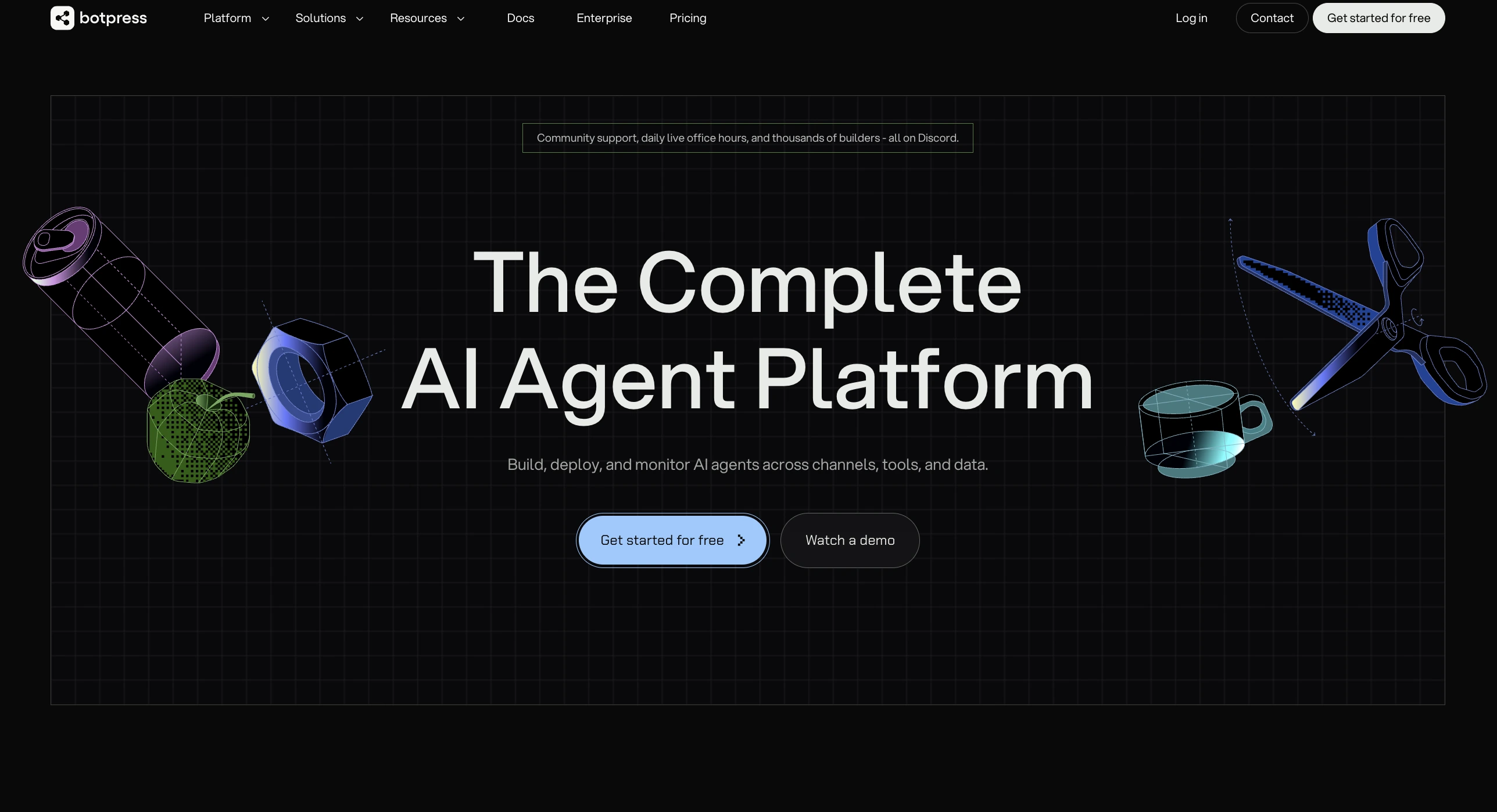
Botpress solves the problem Voiceflow can't: building agents that work in production, not just on a whiteboard. With 10+ years in conversational AI and over 1,000,000 bots deployed, the platform was built for teams that need agents to integrate deeply with business systems and handle complex workflows.
The LLM approach sets Botpress apart. The platform is fully LLM-agnostic, supporting OpenAI, Anthropic, Mistral, and custom models without restrictions. Teams can switch providers or fine-tune models based on cost, performance, or compliance needs — flexibility Voiceflow's credit-based system doesn't offer.
Botpress Studio provides the visual builder experience Voiceflow users appreciate, but with a key difference: developers get full ADK and API access for building custom integrations. The 190+ pre-built integrations cover CRMs, support tools, and communication channels that Voiceflow requires manual API work to connect.
Where Voiceflow forces teams to build their own live chat workarounds, Botpress includes native live chat and direct Zendesk integration on the Plus plan. The Autonomous Engine orchestrates multi-step logic with LLM reasoning, handling the kind of complex decision trees that would require extensive manual flow-building in Voiceflow. Pricing starts with a free tier and scales on usage — no credit walls.
Botpress Pricing
2) Chatbase
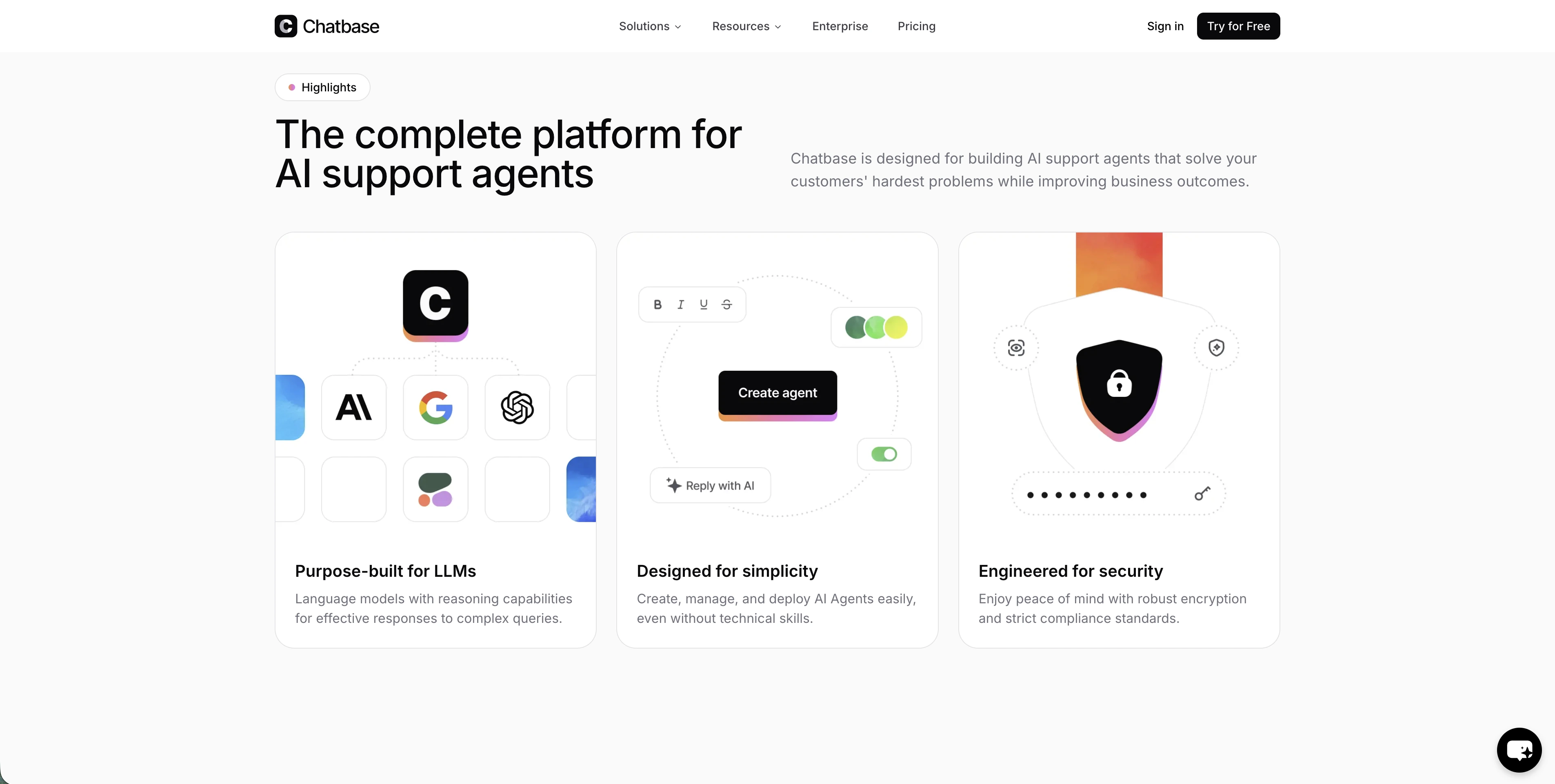
Chatbase takes a different approach than Voiceflow — prioritizing speed over sophistication. Where Voiceflow requires building conversation flows, Chatbase lets teams deploy FAQ bots in minutes by uploading documents or pointing to a website URL.
For small teams needing basic question-answering without flow design, Chatbase delivers faster. The platform trains agents on knowledge bases automatically, making it accessible for non-technical users who find Voiceflow's collaboration features unnecessary overhead. Setup requires minimal configuration, and the straightforward interface keeps things simple.
The trade-off comes with scalability. Chatbase uses a credit-based pricing model starting at $19/month, where message costs vary by LLM. Teams report difficulty predicting monthly costs as usage fluctuates. Integration options remain limited compared to Voiceflow's API flexibility — Zendesk Sunshine and Calendly cover basic needs, but complex workflows require workarounds.
Chatbase works well for straightforward FAQ automation where simplicity matters more than customization. For teams outgrowing basic bots or needing production-grade infrastructure with deeper integrations, more robust platforms offer the flexibility Chatbase can't match.
Chatbase Pricing
3) Tidio
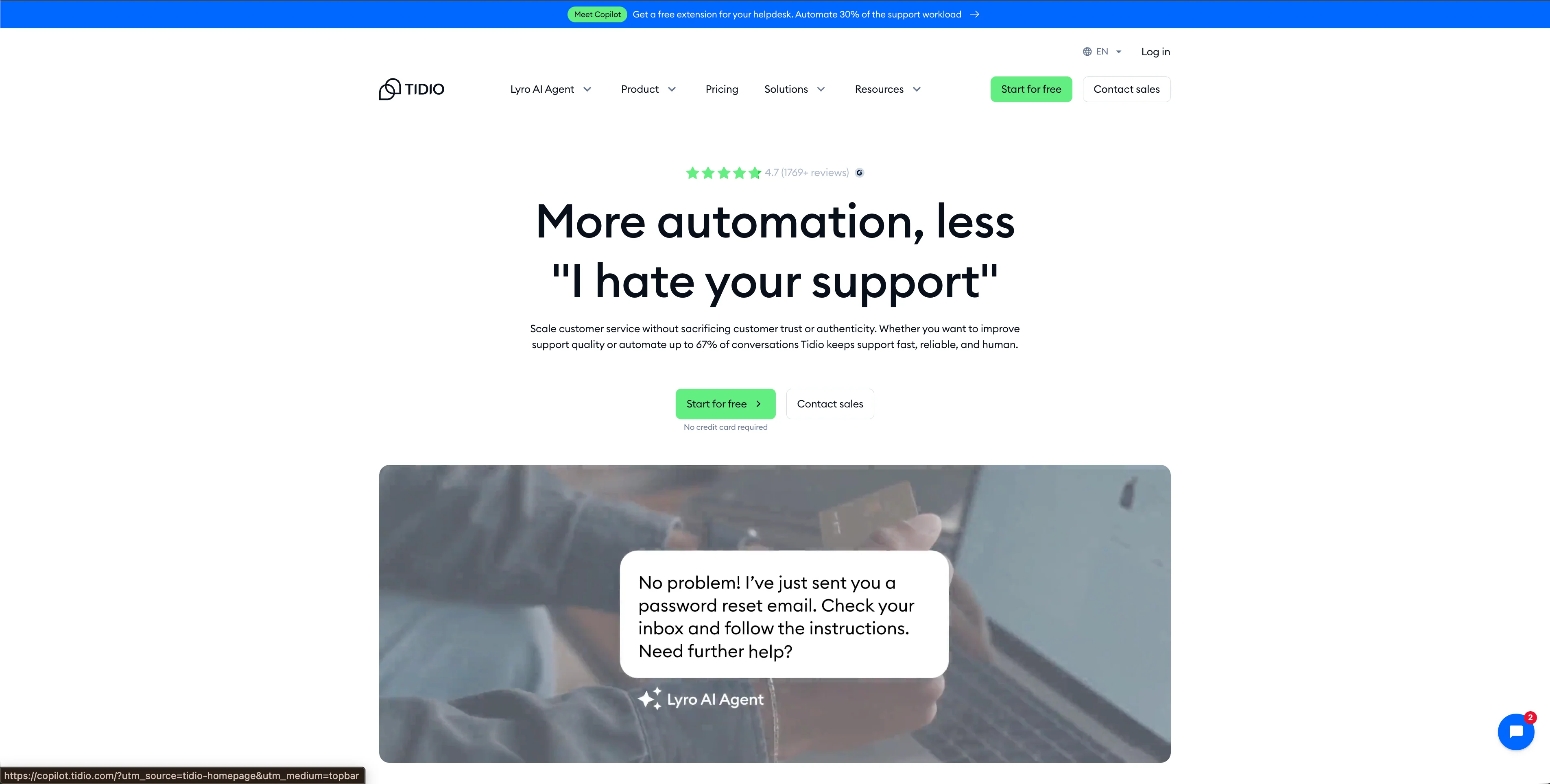
Tidio fills a gap Voiceflow leaves open: native live chat. The platform combines live chat, chatbot flows, and AI automation (Lyro) in one interface, making it particularly valuable for teams that need human handoff without building custom integrations.
Where Voiceflow requires API work to connect live support, Tidio includes it by default. The Shopify integration is notably strong for e-commerce teams, allowing agents to answer product questions, check order status, and handle customer inquiries without switching platforms. For small teams prioritizing speed over customization, Tidio's all-in-one approach reduces setup complexity.
The conversation-based pricing model becomes a consideration as volume grows. Plans start at $29/month for 100 conversations, but Lyro AI and Flows are billed separately at $39/month and $29/month respectively. Teams report actual costs running higher than initial estimates once add-ons factor in. All plans cap at 10 agent seats, which limits team expansion.
Tidio makes sense for e-commerce businesses needing quick live chat deployment with basic automation. For teams requiring deeper integrations, advanced workflows, or flexible LLM options, platforms with production-grade infrastructure provide capabilities Tidio doesn't offer.
Tidio Pricing