


Eighty-five percent of customer service leaders planned to explore conversational AI in 2025. By now, most of them have. The question has shifted from "should we?" to "which tool won't let us down?"
The performance gains justify the investment. AI-assisted agents resolve issues 47% faster with 25% higher first-contact resolution rates, and companies cut support costs by up to 30%.
But not all chatbot platforms deliver equal results—some excel at simple FAQs but fail when complexity increases.
Chatbase Overview
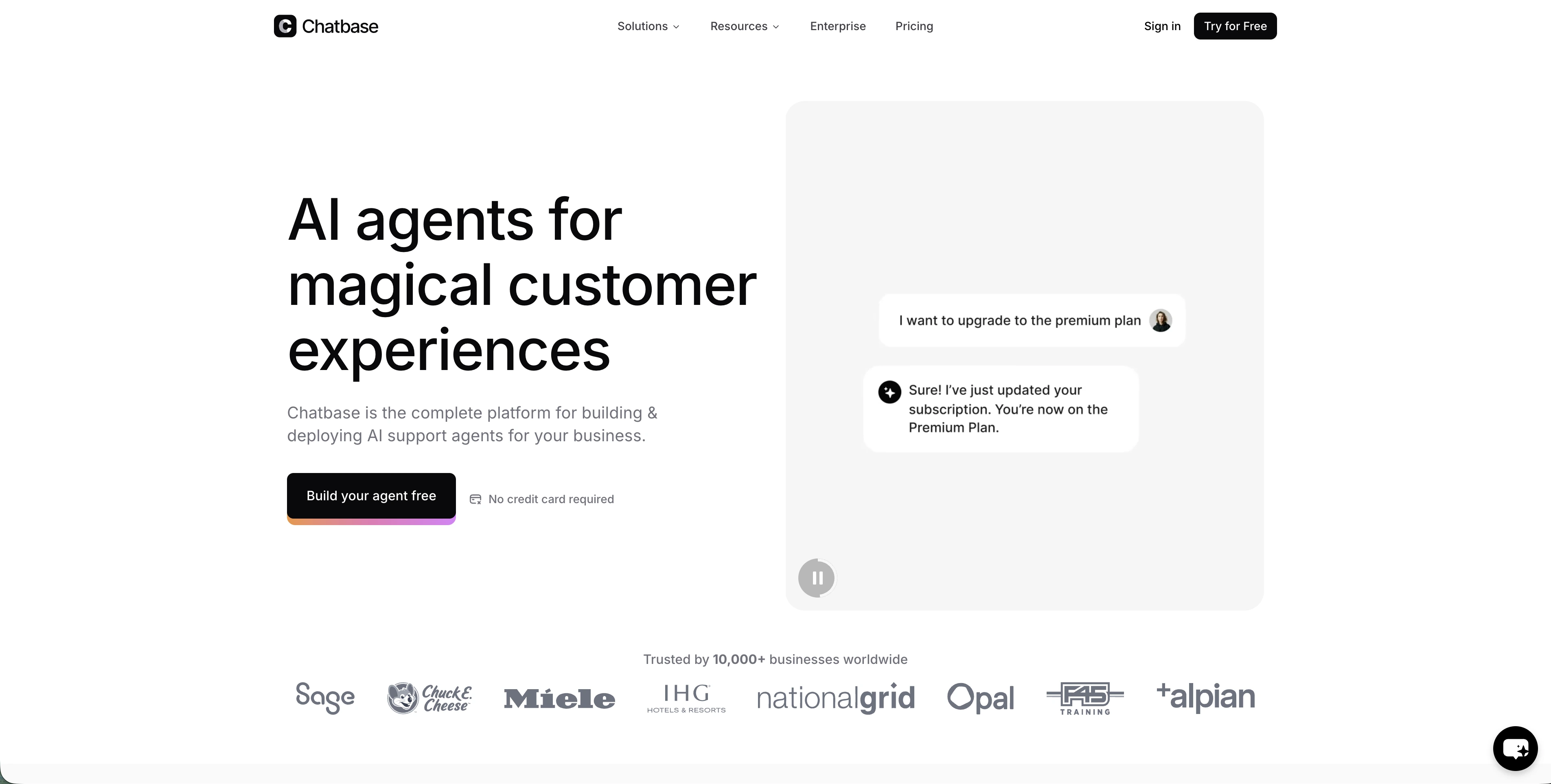
Chatbase is a no-code AI chatbot builder that serves over 10,000 customers across 140+ countries. The platform lets anyone create a custom AI chatbot by uploading documents, pasting website URLs, or connecting tools like Notion and Zendesk.
No coding required. A working bot can be live in minutes.
Chatbase supports 17+ large language models across OpenAI, Anthropic, Google, and others. It deploys to websites, WhatsApp, Messenger, Instagram, Slack, and email.
The target audience is small-to-midsize businesses looking for fast support automation. Think FAQ bots, lead capture agents, and basic knowledge base assistants — not complex multi-step workflows.
Chatbase Pros
Fast time-to-value with minimal learning curve
Capterra reviews average 4.6/5 for ease of use, with users consistently reporting functional chatbots deployed within 10 minutes. The intuitive interface requires no technical skills, making it accessible for small teams and non-developer.
Strong WhatsApp and multi-channel deployment
Chatbase supports WhatsApp, Instagram, Facebook Messenger, Slack, website embeds, and email—broader channel coverage than competitors at similar price points. E-commerce teams particularly praise WhatsApp integration capabilities for customer engagement
Chatbase Cons
Unpredictable pricing
Credits don't equal messages on a 1:1 basis—consumption varies dramatically by AI model, making budgeting difficult. When credits run out, chatbots stop responding entirely unless auto-recharge is enabled at $14 per 1,000 additional credits.
Limited native support for complex, multi-step flows
Chatbase works for straightforward Q&A but lacks visual flow-building for multi-step conversational logic. Users report that complex workflows require external tools or workarounds, making maintenance difficult compared to workflow-native competitors
Customer chatbot only—doesn't streamline internal support operations.
Chatbase operates as a standalone customer tool without helpdesk integration. It cannot assist with internal tasks like ticket tagging, intelligent routing, or helping agents draft responses, missing AI efficiency gains in day-to-day ticket management.
Chatbase Pricing
Chatbase uses a five-tier pricing model with a credit-based system.
Is Chatbase right for me?
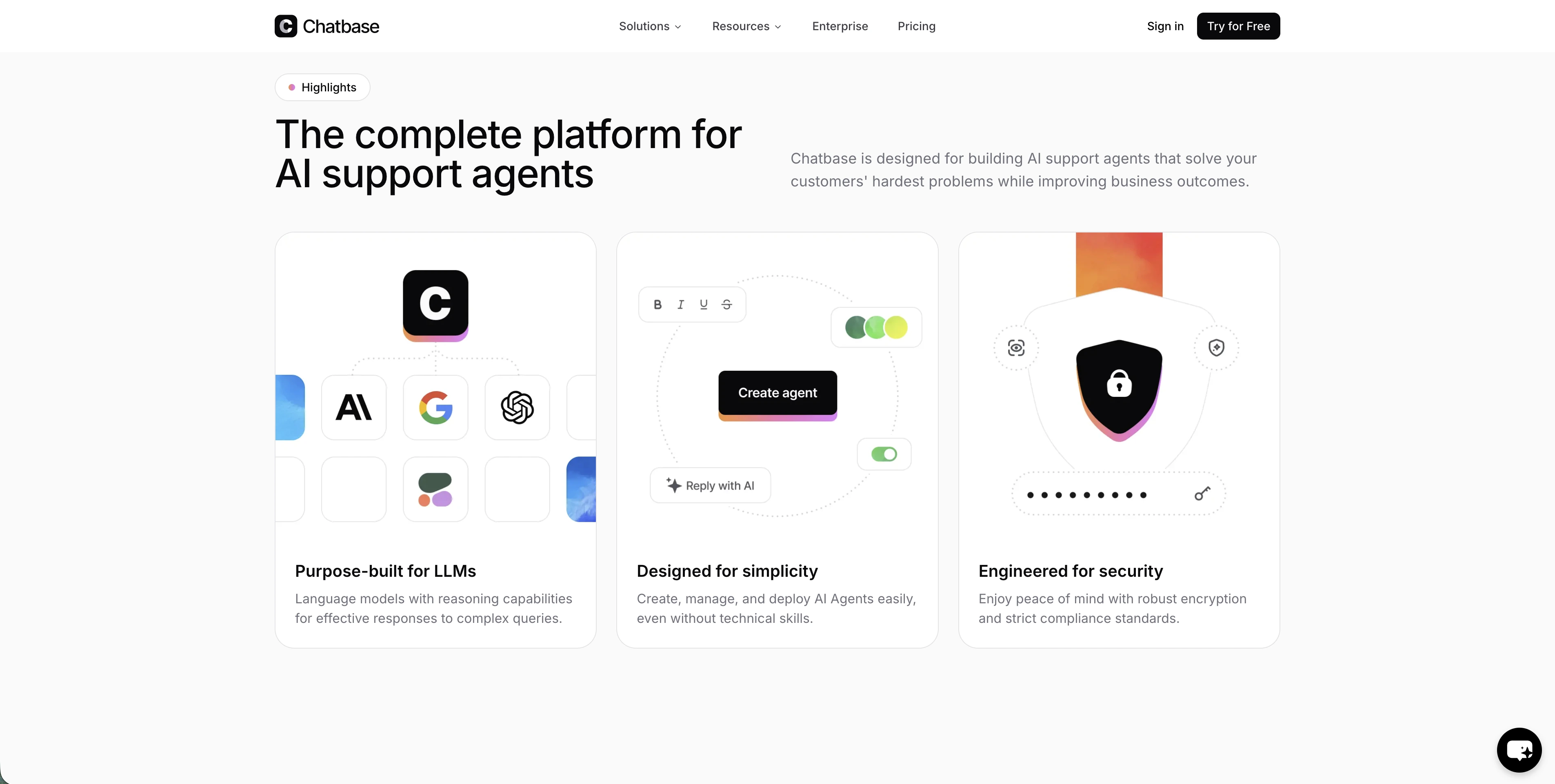
Chatbase is a good fit for:
- SMBs needing a no-code FAQ bot deployed in minutes.
- Teams drowning in repetitive customer questions seeking automated deflection.
- Marketing and CX teams needing lightweight automation with basic integrations.
Chatbase isn't a good fit for:
- Teams requiring a native helpdesk or live-agent inbox.
- Businesses needing structured, multi-step conversation flows with branching logic.
- Organizations requiring predictable budgeting without surprise credit overages.
- Companies needing responsive customer support for urgent production issues.
- Teams that require white-label branding without paying extra monthly fees.
Best Alternatives to Chatbase
1) Botpress
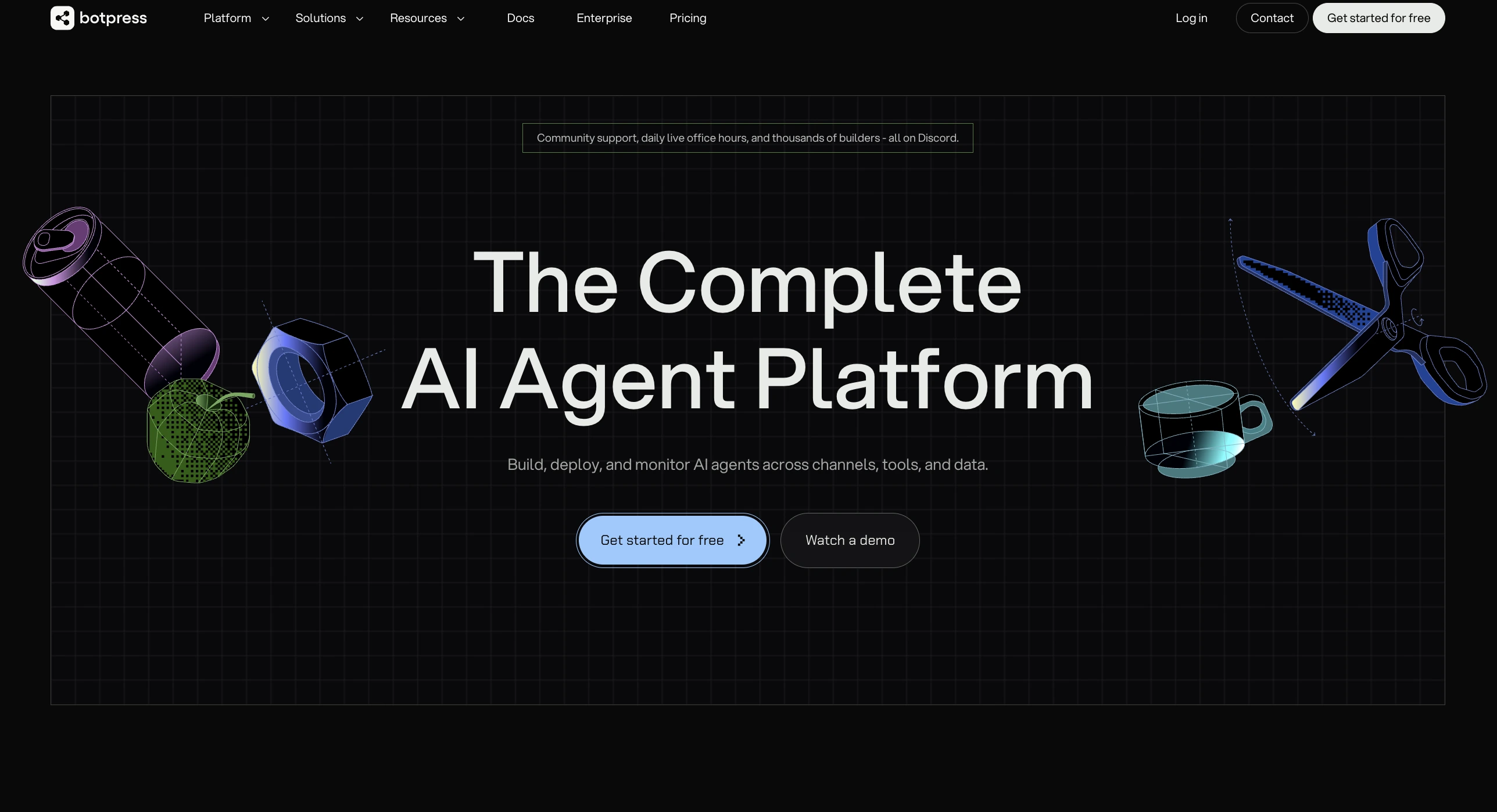
Botpress is an enterprise-grade AI agent platform designed for teams that need chatbots to grow with their business. While Chatbase excels at quick FAQ deployment, Botpress handles complex workflows, advanced integrations, and production-scale operations. Over 1 million bots have been built on the platform since its 2017 launch.
Botpress offers dual flexibility: drag-and-drop conversation design for non-technical teams building structured workflows with branching logic, plus full API control for developers needing custom integrations. This means teams never outgrow the platform as requirements evolve.
Botpress's LLM-agnostic architecture lets teams switch between OpenAI, Anthropic, Google, or open-source models based on cost, performance, or compliance needs. Botpress uses transparent message-based pricing—teams know exactly what each conversation costs regardless of which LLM powers it.
Botpress includes native human handoff, built-in knowledge base management, and persistent conversation memory—handling the complexity that causes Chatbase users to migrate. With 100+ pre-built integrations, Botpress delivers production-grade reliability without the support delays and hallucination issues.
Botpress Pricing
2) Voiceflow
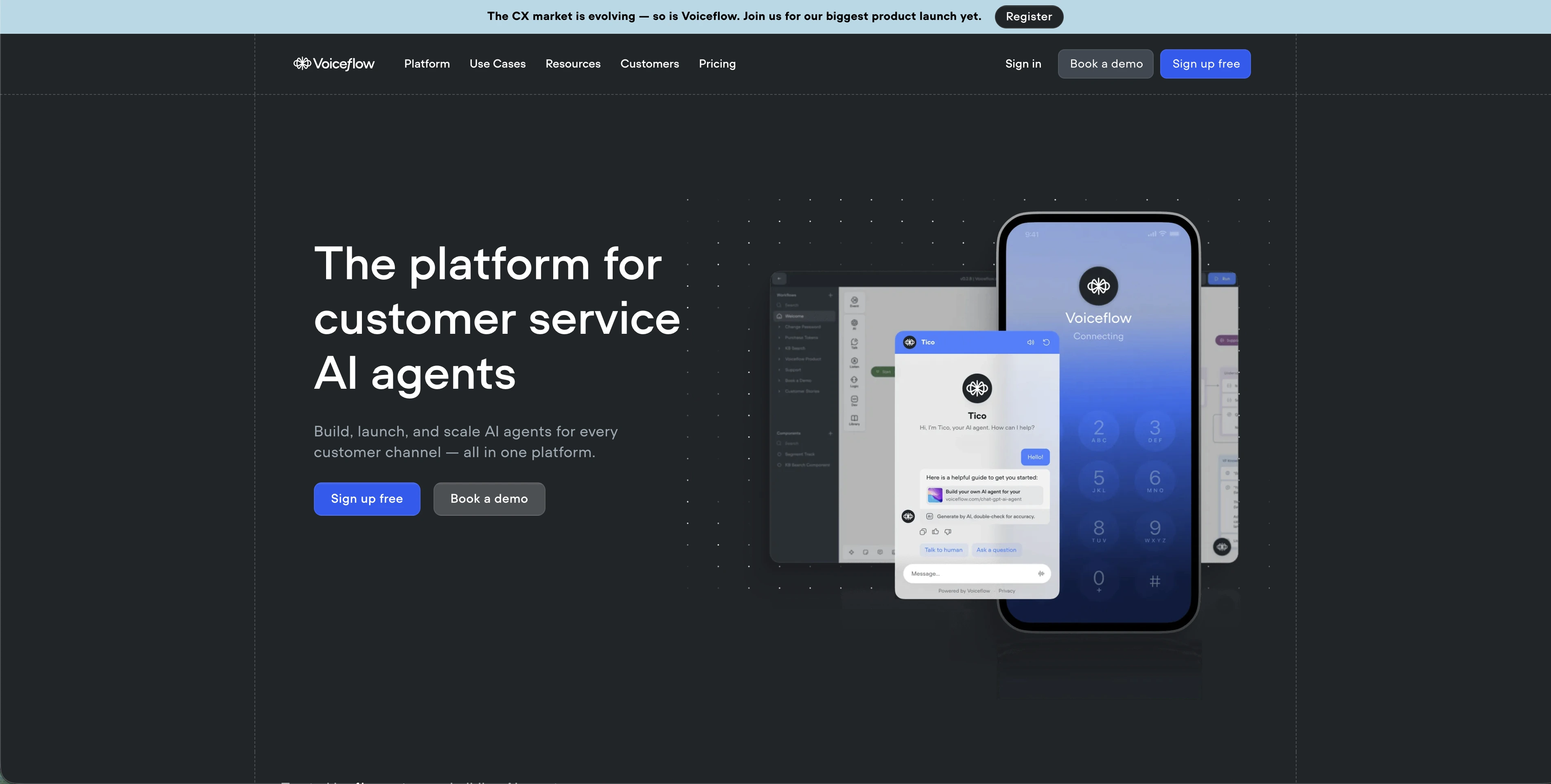
Voiceflow is a visual conversation design platform used by over 250,000 teams. Its drag-and-drop flow builder lets product teams map out complex conversations with branching logic — like a lead qualification bot that asks different follow-up questions depending on the answers.
Voiceflow also supports voice agents through Twilio and Vonage, making it one of the few platforms in this category that handles phone-based AI. That's a capability neither Chatbase nor most competitors offer.
Where Voiceflow gets expensive is the per-editor pricing model. A five-person team on the Business plan pays $750/month in seat costs alone — before credits. Chatbase is cheaper for simple bots, but Voiceflow offers far more design control.
Voiceflow Pricing
Each pricing tier includes an editor. Each additional editor seat costs $50/month. Credits cannot be topped up— once they run out, the agent stops. Voice (Twilio/Vonage) is billed separately.
3) Intercom Fin
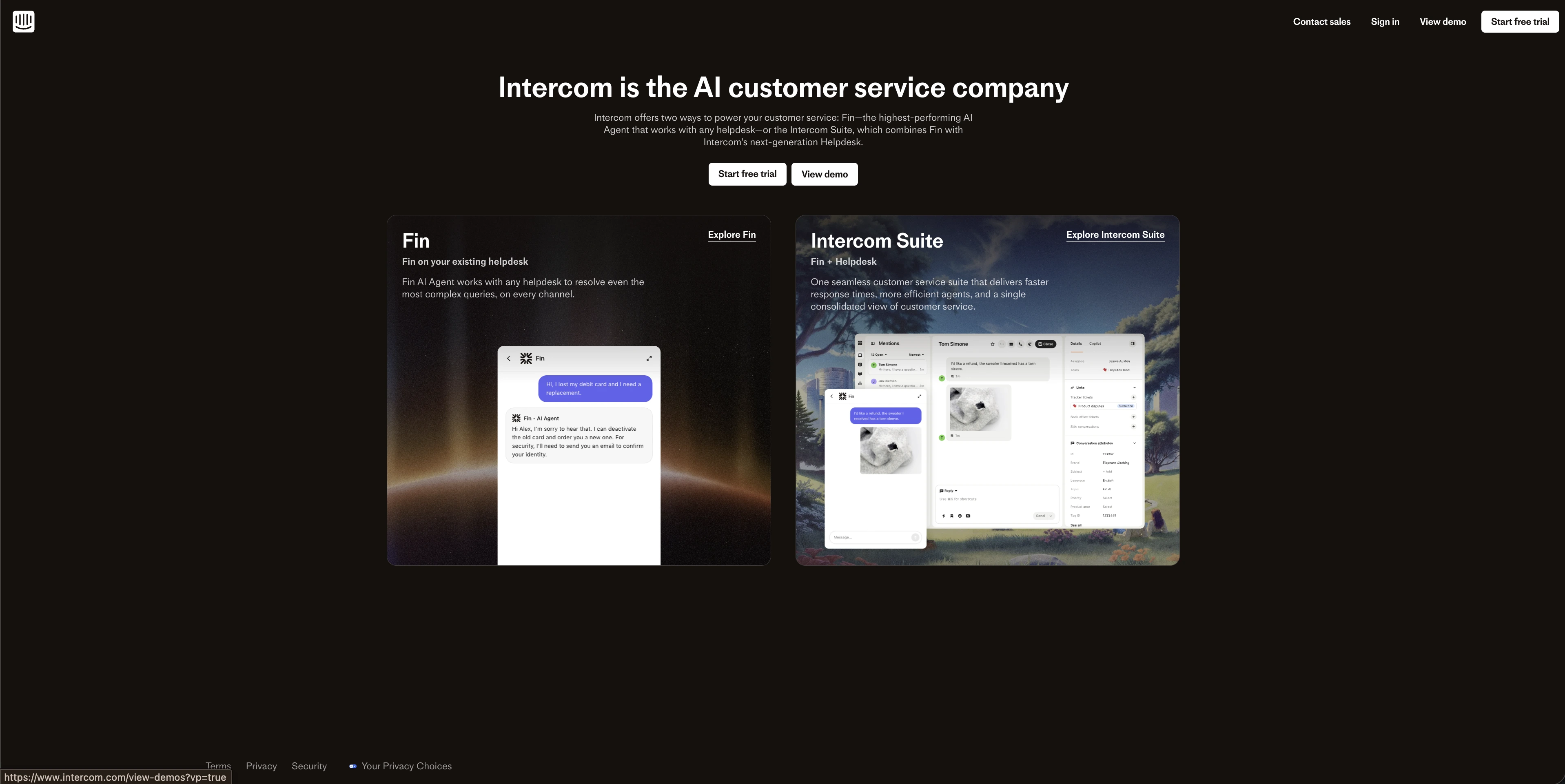
Intercom is an AI-powered customer service platform. Its Fin AI Agent handles complex, multi-turn conversations across chat, email, and social media, resolving up to 65% of queries without human help.
The real difference from Chatbase is what happens when AI isn't enough. Intercom's unified inbox routes unresolved conversations to human agents with full context — conversation history, customer data, and AI-suggested replies. Chatbase has no native live chat or ticketing system.
Intercom also offers automated workflows, customer segmentation, and proactive messaging — tools designed for established support teams managing thousands of conversations monthly. It's a full operating system for customer service, not just an AI responder.
Intercom Pricing
Each pricing tier includes a “seat”. Fin AI Agent is included on every plan—but charges $0.99 per resolution on top of the seat price.